

VOX FEMINA brings together more than six decades of experience across gender equality policy, feminist economics, public administration and institutional reform
Our team has worked at the highest levels of government, within multilateral institutions, and across philanthropy and civil society. We understand not only how policy is designed, but how it is negotiated, operationalised and experienced.
We know how change happens inside systems - through formal processes, and through the less visible dynamics of influence, relationships and power.
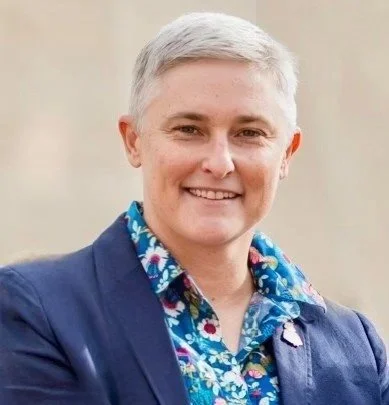
Meredith Turnbull
Meredith Turnbull is a strategist, advisor and facilitator with more than two decades of experience working with organisations committed to systemic change.
She partners with leadership teams, boards and executives to strengthen strategy, performance and organisational resilience – helping institutions navigate complexity and deliver meaningful impact.
Her work spans gender equality, climate and sustainability, and social reform. She is also a highly regarded executive coach, drawing on feminist leadership and positive psychology to support individuals operating in complex environments.
Meredith has advised major philanthropic foundations, government bodies and national initiatives, including contributions to Australia’s National Gender Equality Strategy and reforms to workplace gender equality frameworks.
She brings a distinctive capability: translating systemic ambition into organisational action.
Director

Chantelle Stratford PSM is an internationally recognised leader in gender equality and economic systems reform.
With senior executive experience across the Australian Government and multilateral institutions, Chantelle has led national reform agendas, negotiated international agreements, and chaired global policy forums advancing women’s economic equality and addressing gender-based violence.
Her work focuses on redesigning economic, fiscal and social systems to embed gender equality at their core. She operates at the level of institutional power, working across government, business and international systems to deliver structural change.
Her areas of leadership include:
Structural and systems reform and strategy
Social policy across health, housing, safety and income security
Economic policy and inclusive growth
Gender-responsive budgeting, pay gap transparency and labour market reform
Modern slavery and supply chain accountability
Women, peace and security
Multilateral diplomacy and international economic policy
Chantelle is known for advancing reform in politically complex and geopolitically diverse environments. She drives cross-sector reform across government, business, philanthropy and civil society to deliver durable institutional change. She views gender equality as a central driver of productivity, stability and long-term prosperity for all.
Chantelle was awarded the Public Service Medal in 2024 for her work leading gender equality. She serves as a Board Director of the International Women's Development Agency, Global Sisters and the National Council of Women, and is a Women Leaders Institute Australia Fellow.
Principal Gender Specialist
Chantelle Stratford PSM

Shelby Schofield
Principal Economist
Shelby Schofield is a feminist economist specialising in the design of economic systems to advance gender equality.
With more than 20 years in senior roles across the Australian Government, including Treasury and the Department of the Prime Minister and Cabinet, Shelby has led major reforms in tax policy, macroeconomic policy and gender-responsive economic analysis.
As the inaugural Chief Economist in the Office for Women, she played a central role in delivering:
Employer-level gender pay gap reporting
Australia’s first National Gender Equality Strategy
Gender-responsive budgeting systems
Paid parental leave expansion, employment services and education systems reform
Strengthened national gender data frameworks
Shelby also represented Australia on the OECD’s Working Party on Gender Mainstreaming and Governance.
Shelby’s work focuses on how economic systems – across work, care and income – shape gendered outcomes, and how these systems can be redesigned to deliver more equitable results.